

Blogs

Life Science Group (LSG) Laboratory Services ran an independent evaluation of Low Adhere CytoCaf, a low-attachment surface coating developed by MarraBio, in collaboration with TCS Biosciences. The study tested whether CytoCaf reduces cell attachment and promotes 3D spheroid formation in four mammalian cell lines, giving MarraBio independent data to support product development and commercialisation.
Low-attachment surfaces are widely used to grow spheroids, the 3D cell models that better reflect how cells behave in tissue. Before taking Low Adhere CytoCaf to market, MarraBio needed independent experimental evidence that the coating works. Data from an external laboratory would strengthen the case they could present to customers, partners and investors.
The study had to show that CytoCaf consistently reduces cell attachment and supports spheroid formation across different cell types and culture formats. It also had to go beyond simple aggregation, distinguishing loose clusters of cells from compact, well-defined spheroids.
Rather than relying on a single cell model or endpoint, LSG designed a comparative, time-course study. We provided the cell lines, experimental design, cell culture expertise, comparative testing, microscopy and scientific interpretation.
The study used four epithelial and cancer cell lines known to form spheroids and relevant to 3D cell culture models: HEK293, HepG2, A549 and PC3. Defined timepoints, plate formats, seeding densities and coating conditions allowed a direct comparison of CytoCaf against untreated controls and a competitor pluronic coating. For HEK293, for example, we tested 6-, 24- and 96-well plate formats and imaged the cells throughout a 72-hour study period.
LSG recorded changes in cell morphology and aggregation over time by phase-contrast microscopy. This produced a detailed dataset from which CytoCaf’s performance could be assessed.
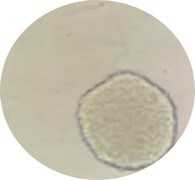
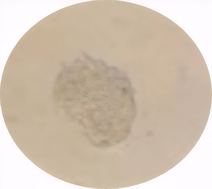
Figure 1 (left): HEK293 cells on Low Adhere CytoCaf, 48 hours, 6-well plate.
Figure 2 (right): HepG2 cells on Low Adhere CytoCaf, 48 hours, 96-well plate.
The MarraBio project shows how LSG supports biotechnology companies and developers of life science tools and reagents with independent biological evaluation. Our capabilities include:
Developing a cell culture product or reagent and need independent data? Find out more about LSG Custom Lab Services, or email salesdist@lifesciencegroup.co.uk to discuss your study.
A low-attachment coating is a surface treatment applied to cell culture plates or flasks that stops cells sticking to the plastic. Without a surface to attach to, many cell types aggregate and form 3D structures such as spheroids instead of growing as a flat monolayer.
Low Adhere CytoCaf is a low-attachment coating for 3D cell culture developed by MarraBio. LSG Laboratory Services evaluated it independently, in collaboration with TCS Biosciences, to test whether it reduces cell attachment and promotes spheroid formation.
The study used four epithelial and cancer cell lines known to form spheroids: HEK293, HepG2, A549 and PC3. Testing across several cell lines gives a broader view of performance than a single-model study.
Spheroids are 3D cell models that better reflect how cells behave in tissue than flat 2D cultures. They are widely used in cancer research, drug screening and toxicology, where more representative models can give more relevant results.
Independent data from an external laboratory carries more weight with customers, partners and investors than in-house results alone. A structured comparative study also shows where a product performs best and where further optimisation may help.
Yes. LSG Laboratory Services runs independent biological evaluations for developers of cell culture products, reagents and biomaterials, covering study design, cell culture, comparative testing, microscopy and analysis. Email salesdist@lifesciencegroup.co.uk to discuss your study.